
Introduction
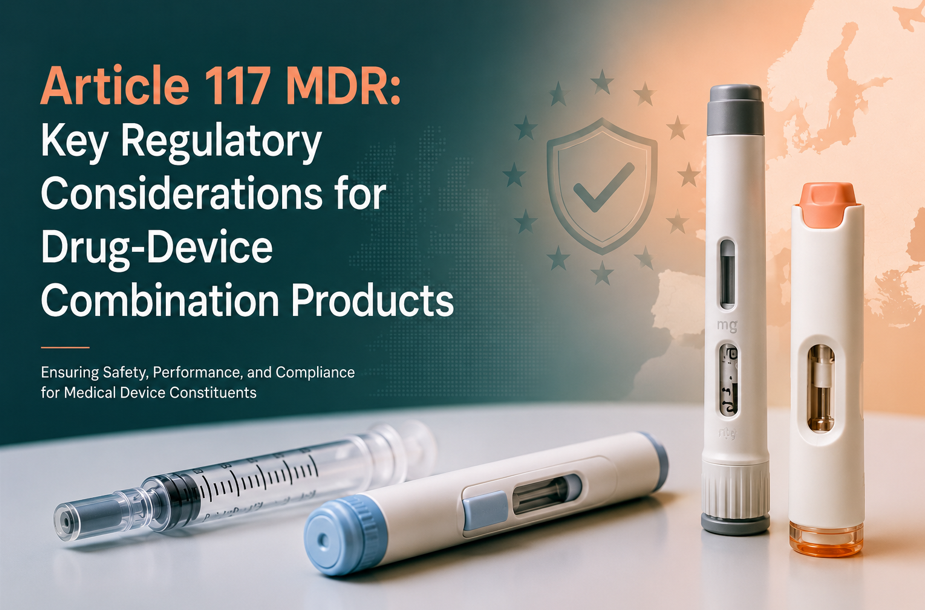
The healthcare industry continues to witness significant growth in the development of drug-device combination products. From insulin delivery systems and prefilled syringes to semaglutide pen injectors and autoinjectors, manufacturers are increasingly combining pharmaceutical therapies with innovative delivery technologies to improve patient outcomes, convenience, and treatment adherence.
As these products become more sophisticated and widely used, regulators have placed greater emphasis on ensuring that the medical device constituent achieves an appropriate level of safety and performance. One of the most important regulatory developments in this area has been the introduction of Article 117 under Regulation (EU) 2017/745 on Medical Devices (MDR).
For pharmaceutical companies and combination product manufacturers seeking access to the European market, understanding the requirements of Article 117 has become an essential part of regulatory planning and submission strategy.
The Evolution of Drug-Device Combination Products
Drug-device combination products have become an important part of modern healthcare delivery.
Common examples include:
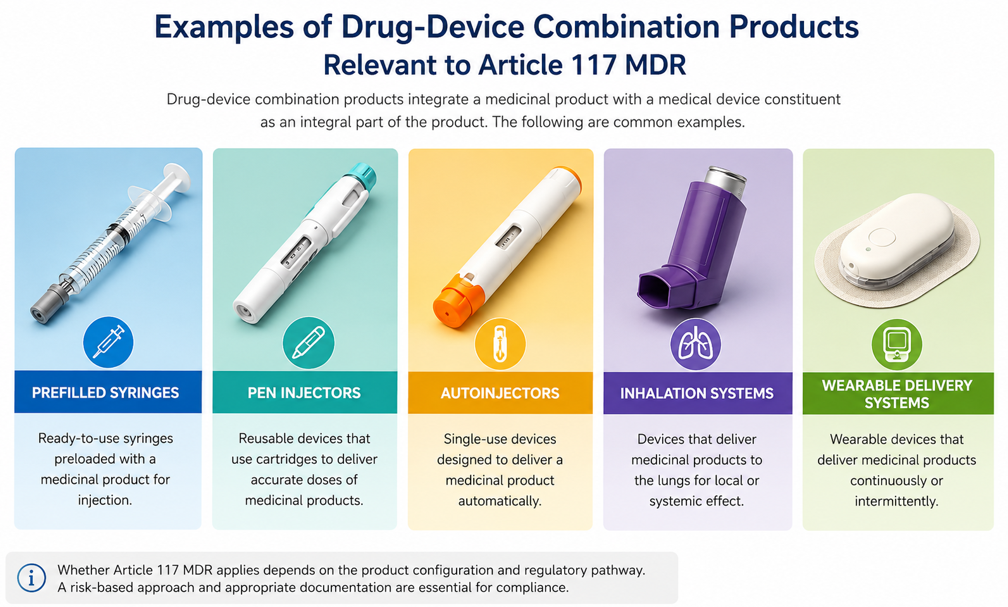
- Semaglutide injection pens used in diabetes and obesity management
- Insulin pen injectors
- Prefilled syringes for biologic therapies
- Autoinjectors for chronic disease management
- Inhalation systems for respiratory treatments
- Wearable drug delivery systems
These products combine the therapeutic benefits of medicinal products with delivery devices designed to improve dosing accuracy, ease of use, and patient compliance.
As a result, the performance of the device constituent can have a direct impact on the safety and effectiveness of the overall therapy.
Understanding Article 117
Article 117 was introduced as part of the European Medical Device Regulation and amended Directive 2001/83/EC governing medicinal products for human use.
The purpose of Article 117 is to ensure that medical device constituents incorporated within medicinal products are assessed against the relevant General Safety and Performance Requirements (GSPR) of the MDR.
Historically, regulatory assessment of combination products focused primarily on the medicinal substance. While device-related aspects were reviewed, the level of scrutiny applied to the device constituent was not always equivalent to that expected for standalone medical devices.
Article 117 addresses this gap by requiring manufacturers to provide evidence that the device constituent complies with applicable MDR requirements.
Regulatory Basis for Article 117
Article 117 amended Directive 2001/83/EC and introduced additional requirements for medicinal products incorporating a medical device constituent. Where the device constituent does not already have evidence of conformity assessment and would require Notified Body involvement if marketed separately, the marketing authorization application must include an opinion issued by an MDR-designated Notified Body. This opinion confirms compliance of the device constituent with the applicable General Safety and Performance Requirements (GSPR) of MDR Annex I.
Regulatory Significance of Article 117
The medical device component of a combination product plays a critical role in delivering the intended therapy.
For example, a pen injector used to administer semaglutide or insulin must consistently deliver the correct dose under normal conditions of use. Similarly, a prefilled syringe or autoinjector must function reliably throughout its intended shelf life and support safe administration by healthcare professionals or patients.
Failure of the device constituent may affect treatment effectiveness, patient safety, or product performance.
Article 117 helps ensure that manufacturers adequately evaluate and document the safety, performance, and reliability of the device component before the product is placed on the market.
Scope of Article 117
Article 117 generally applies to medicinal products that incorporate a medical device as an integral part of the product and are intended to be used exclusively in that combination.
Examples include:
- Prefilled syringes
- Pen injectors
- Autoinjectors
- Drug delivery pumps
- Inhalation devices
- Transdermal delivery systems
- Wearable injection devices
The applicability of Article 117 depends on the specific product configuration, intended use, and regulatory pathway. Manufacturers should assess whether the medical device forms an integral part of the medicinal product and determine the appropriate conformity assessment requirements during product development.
In these cases, the medicinal product remains regulated under pharmaceutical legislation because the primary mode of action is achieved through pharmacological, immunological, or metabolic means.
However, the device constituent must also demonstrate compliance with the applicable requirements of MDR Annex I.
Notified Body Involvement
One of the key aspects of Article 117 is the requirement for independent assessment of the device constituent under certain circumstances.
Where the device constituent does not already possess appropriate conformity assessment evidence and would require Notified Body involvement if placed on the market separately, a Notified Body Opinion must be included within the medicinal product marketing authorization application.
The purpose of this assessment is to confirm that the device constituent complies with the applicable General Safety and Performance Requirements of the MDR.
This additional review provides greater confidence in the safety and performance of the device component and supports regulatory decision-making during medicinal product approval.
Early engagement and proper planning can help manufacturers avoid delays associated with documentation deficiencies and assessment observations.
Technical Documentation Requirements
A successful Article 117 submission relies heavily on the quality and completeness of the technical documentation supporting the device constituent.
In practice, Notified Bodies expect documentation to be structured, traceable, and supported by objective evidence. Clear linkage between design requirements, risk controls, verification activities, and performance data can significantly improve assessment efficiency and reduce regulatory questions during the review process.
Typical Documentation Reviewed During Article 117 Assessments
While documentation requirements may vary depending on the nature and complexity of the product, Notified Bodies commonly review the following:
- Device Description
- Intended Purpose
- GSPR Checklist
- Risk Management File
- Design Verification Reports
- Validation Reports
- Biological Evaluation Documentation
- Usability Engineering Documentation
- Labeling and Instructions for Use
Key areas typically reviewed include:
Device Description and Intended Purpose
Manufacturers should clearly define the design, functionality, intended purpose, and operating principles of the device constituent.
Risk Management
A structured risk management process should be established to identify potential hazards, evaluate associated risks, implement risk control measures, and assess residual risks.
Design Verification and Validation
Manufacturers should provide objective evidence demonstrating that the device performs consistently and meets its intended design specifications.
Usability Engineering
Usability studies should demonstrate that intended users can operate the device safely and effectively under expected conditions of use.
Biological Safety
Biocompatibility evaluations should be performed based on the nature and duration of contact between the device constituent and the patient or medicinal product.
Performance Testing
Testing should demonstrate that the device consistently performs its intended function throughout the claimed shelf life and operating conditions.
GSPR Compliance
Manufacturers should provide documented evidence demonstrating compliance with the applicable General Safety and Performance Requirements of MDR Annex I.
Common Challenges for Manufacturers
Organizations preparing for Article 117 assessments often encounter challenges associated with documentation readiness.
Some commonly observed issues include:
- Incomplete design and development documentation
- Insufficient traceability between requirements, risks, testing, and performance claims
- Limited usability engineering evidence
- Inadequate risk management documentation
- Insufficient performance validation data
- Gaps in biological safety evaluations
- Incomplete GSPR compliance documentation
Many of these challenges arise because pharmaceutical development processes have traditionally focused on medicinal product requirements rather than medical device regulatory expectations.
Preparing for Article 117 Readiness
Manufacturers can significantly reduce regulatory risks by evaluating Article 117 requirements early in product development.
A structured readiness assessment may include:
- Device constituent review
- MDR Annex I GSPR assessment
- Risk management review
- Design documentation assessment
- Verification and validation review
- Usability engineering assessment
- Biological safety review
- Regulatory gap analysis
Early identification of documentation gaps allows manufacturers to implement corrective actions before submission activities begin.
Conclusion
Article 117 has become an important regulatory consideration for manufacturers of drug-device combination products seeking access to the European market. By strengthening oversight of the device constituent and aligning expectations with MDR requirements, the regulation helps ensure that combination products achieve appropriate levels of safety, performance, and reliability.
For manufacturers developing semaglutide pen injectors, insulin delivery systems, autoinjectors, prefilled syringes, inhalation devices, and other advanced drug delivery technologies, understanding Article 117 requirements is essential for successful regulatory submissions.
A proactive regulatory strategy, supported by comprehensive technical documentation, effective risk management, and early assessment of compliance requirements, remains the foundation for achieving successful market access in Europe.
How MedOrdyn Solutions Supports Manufacturers with Article 117 Compliance
At MedOrdyn Solutions, we support pharmaceutical and medical device manufacturers with regulatory and compliance activities related to:
- Article 117 Applicability and Gap Assessments
- Drug-Device Combination Product Regulatory Support
- MDR Annex I General Safety and Performance Requirements (GSPR) Reviews
- Technical Documentation Review and Remediation
- ISO 14971 Risk Management Documentation
- Biological Evaluation and Biocompatibility Support
- Usability Engineering Documentation Review
- Clinical Evaluation Support
- Notified Body Submission Readiness Assessments
- EU MDR Regulatory Compliance Support
- Global Regulatory Strategy and Market Access Activities
Our team supports manufacturers developing prefilled syringes, semaglutide pen injectors, insulin delivery systems, autoinjectors, inhalation devices, wearable drug delivery systems, and other combination products in navigating regulatory requirements and preparing for successful market access in Europe and other global markets.
For more information regarding Article 117 compliance, EU MDR requirements, and global regulatory support services, please contact MedOrdyn Solutions at info@medordyn.com.